
Comparison
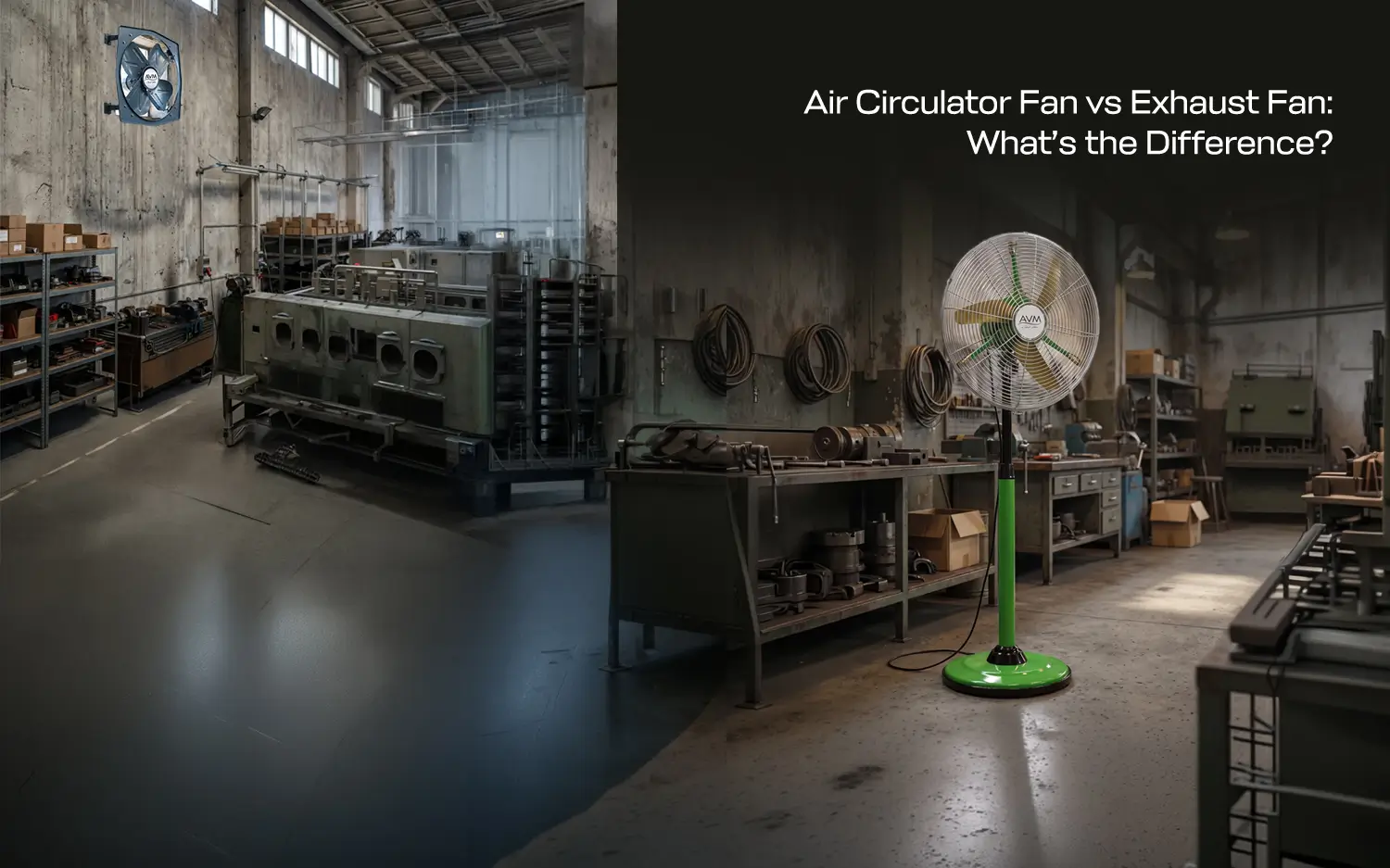
Air circulator vs exhaust fan: which one does your space need?
They solve different problems. Here is how to tell whether you need to move air, remove it, or both.
Selection Guide
Sweep, air delivery, mounting, and duty cycle — the practical factors that decide which circulator fits your space.
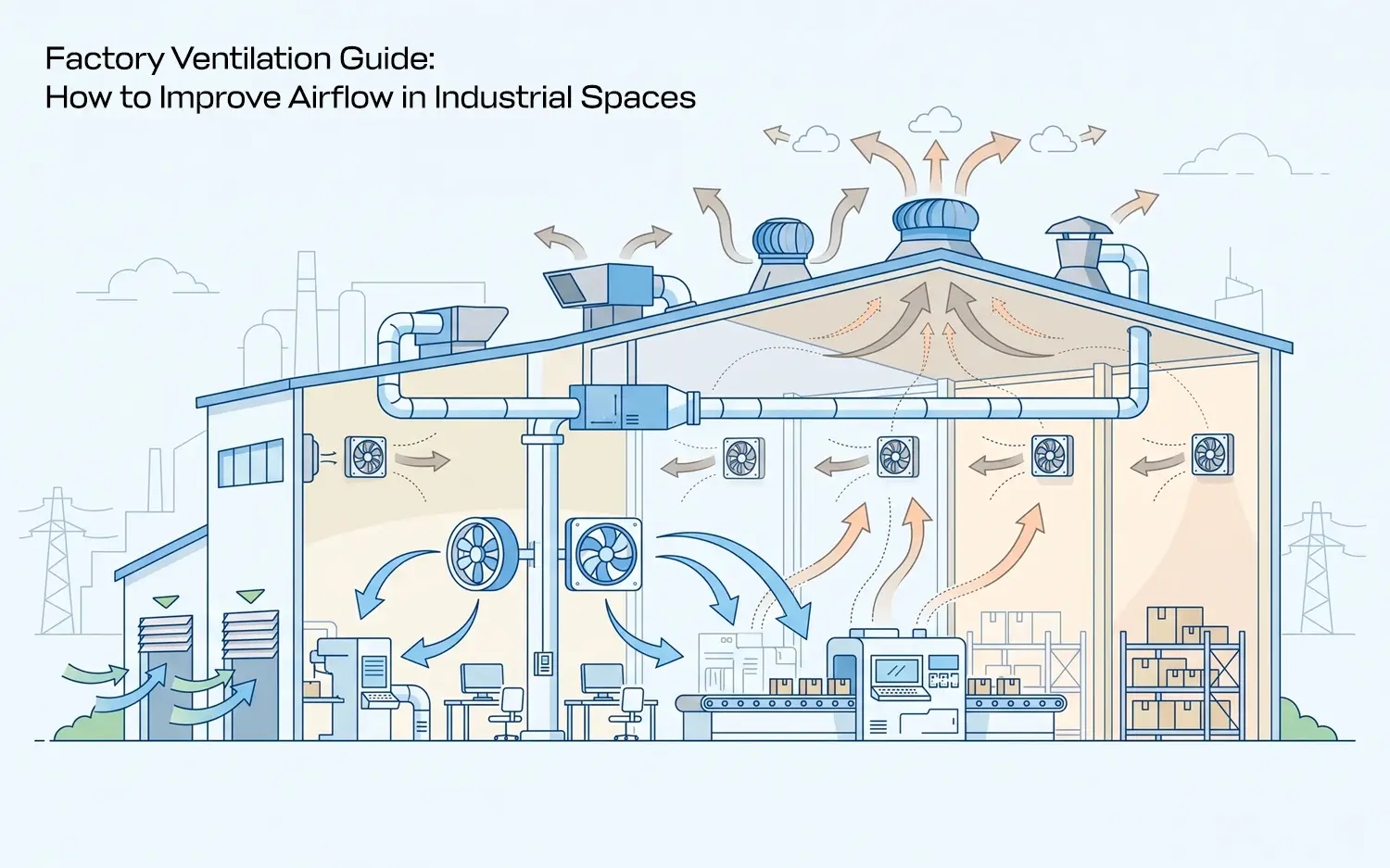
The right air circulator begins with an honest look at the space it has to serve. Ceiling height, floor area, obstructions, and the work happening on the floor all shape the answer far more than any single spec on a datasheet.
A tall warehouse with open aisles has very different needs from a low, partitioned workshop. Map the space first; the product follows.
Air delivery, measured in cubic metres per minute (CMM), tells you how much air a fan moves. For large volumes you want high delivery reaching the depth of the space rather than stalling near the unit.
AVM publishes measured air delivery figures rather than estimates, so you can size to the room with confidence.
Where floor space must stay clear, wall-mounted circulators keep airflow high and unobstructed. Pedestal units suit flexible placement; fixed high-delivery units suit permanent coverage.
The mounting decision is as much about operations as airflow — a fan in the wrong place is a fan people work around.
A fan running long shifts every day is a different purchase from one used occasionally. Duty cycle drives both the motor choice and the value of energy efficiency, which compounds quickly across a floor of long-running units.
Keep Reading
Comparison
They solve different problems. Here is how to tell whether you need to move air, remove it, or both.

Industrial
What actually works in high-volume industrial spaces — and why floor-clear airflow matters more than raw power.
A little routine care keeps airflow strong and motors healthy. Here is the short list that matters.
Press & Media
For interviews, quotes, imagery, or brand assets, get in touch with the AVM team.